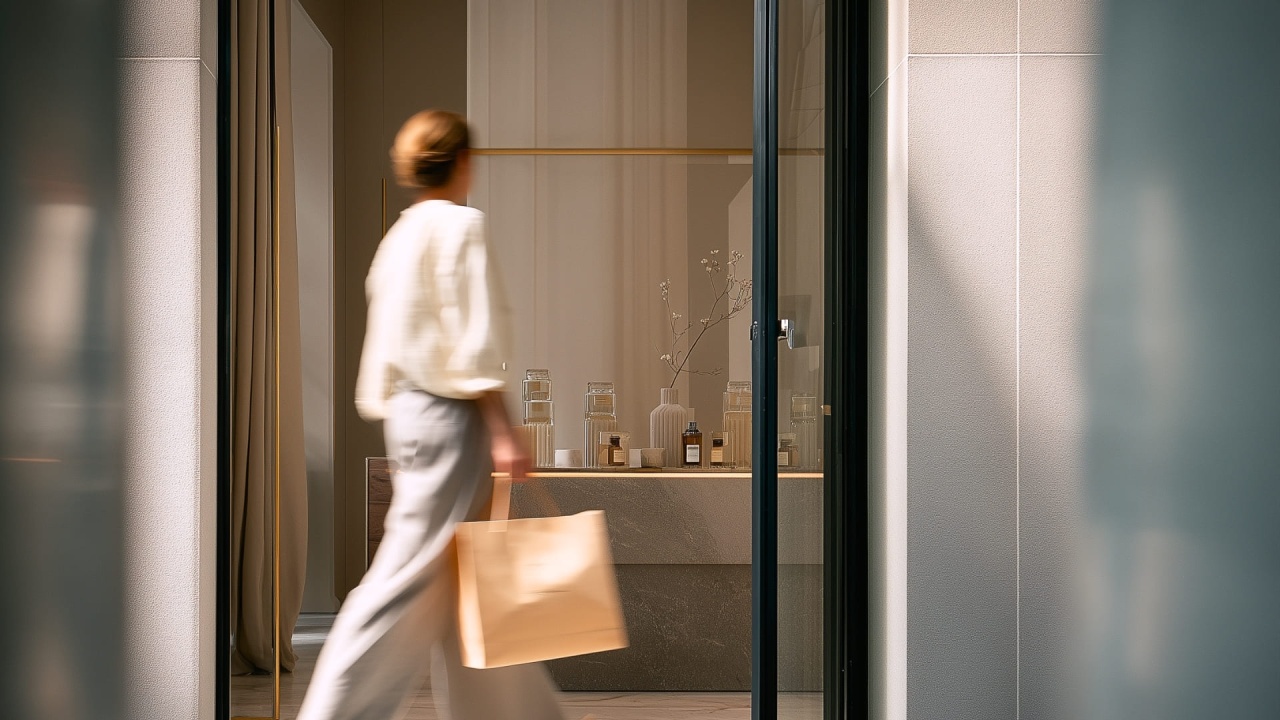
In contemporary retail, efficiency has become a dogma. Fluid processes, fast payments, optimized journeys, immediate assistance: everything is designed to reduce friction. This makes perfect sense in many contexts. But in luxury, excess speed can erode value.
Those who enter a high-end boutique are not looking for speed. They are looking for meaning. And when the visit unfolds too quickly—even if technically flawless—the brain does not register it as a memorable experience. This is not a romantic intuition. It is a documented cognitive mechanism.
Daniel Kahneman, in Thinking, Fast and Slow, describes a phenomenon known as the Peak-End Rule: our memory of an experience does not depend on the sum of its minutes, but on its most intense moments and the way it ends. This means a store can perform perfectly on an operational level, and at the same time disappear from memory.
In luxury, an experience perceived as short is an experience perceived as less valuable. This makes it essential to distinguish between chronological time and psychological time.
Time is not a poetic construct. It is a measurable cognitive phenomenon.
The idea that perceived time can be designed is not a creative intuition. It is the convergence of at least four well-established research streams.
Mihaly Csikszentmihalyi, through his theory of Flow, demonstrated that when attention is fully absorbed, time perception shifts. It is not about minutes, but about immersion. A meta-analysis published on ScienceDirect confirms that temporal distortion is one of the most robust dimensions of the flow state.
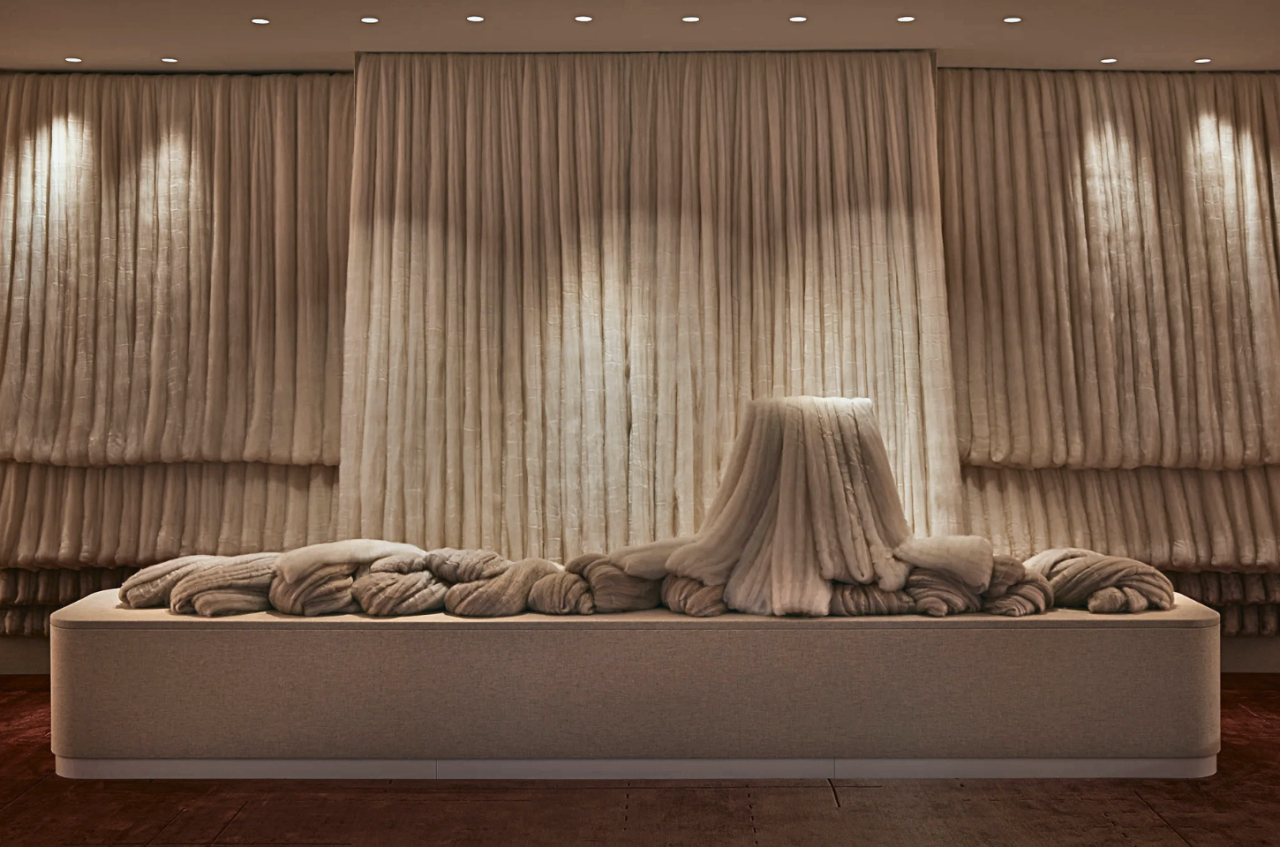
This is what happens, for instance, when stepping into the London flagship of Loro Piana on New Bond Street. Following its reopening, the maison integrated an exhibition into the space—Master of Fibers, curated by Judith Clark. At the entrance, raw cashmere to touch. In the rooms, a fabric sample book from 1926, just two years after the brand’s founding. Then a film moving across the plains of Inner Mongolia. The sound of a bamboo flute tracing the journey of the fiber, from goat to loom.
The boutique becomes something to move through, not just a place to purchase. Archive, material, sound, detail: the flow emerges because each room offers a precise object of attention. Attention is guided, not rushed. And time begins to dilate.
Philip Zimbardo, in The Time Paradox, shifts the focus to emotional context: stressful environments compress time; coherent, safe environments expand it. Paco Underhill, founder of in-store behavioral analysis, showed in Why We Buy how purchasing behavior is shaped by micro-environmental factors—layout, lighting, rhythm of display.
Added to this is a now consolidated body of academic research: studies in sensory marketing consistently show that overstimulating environments reduce post-purchase satisfaction, while balanced environments increase dwell time and perceived value. A recent report by McKinsey & Company on luxury captures it with clarity: “Time is the greatest luxury of all.”
Time is not a poetic layer. It is a design variable. And, when shaped with precision, it becomes a gift.
Why this matters now
The contemporary luxury landscape is shaped by a combination of factors that makes this awareness both relevant and urgent. Luxury clients are saturated with stimuli. Touchpoints have multiplied. Attention spans have narrowed.
The paradox is not that people leave. It’s that they stay, they purchase—and yet the experience remains emotionally thin. The real risk is not abandonment. It is the superficiality of the encounter.
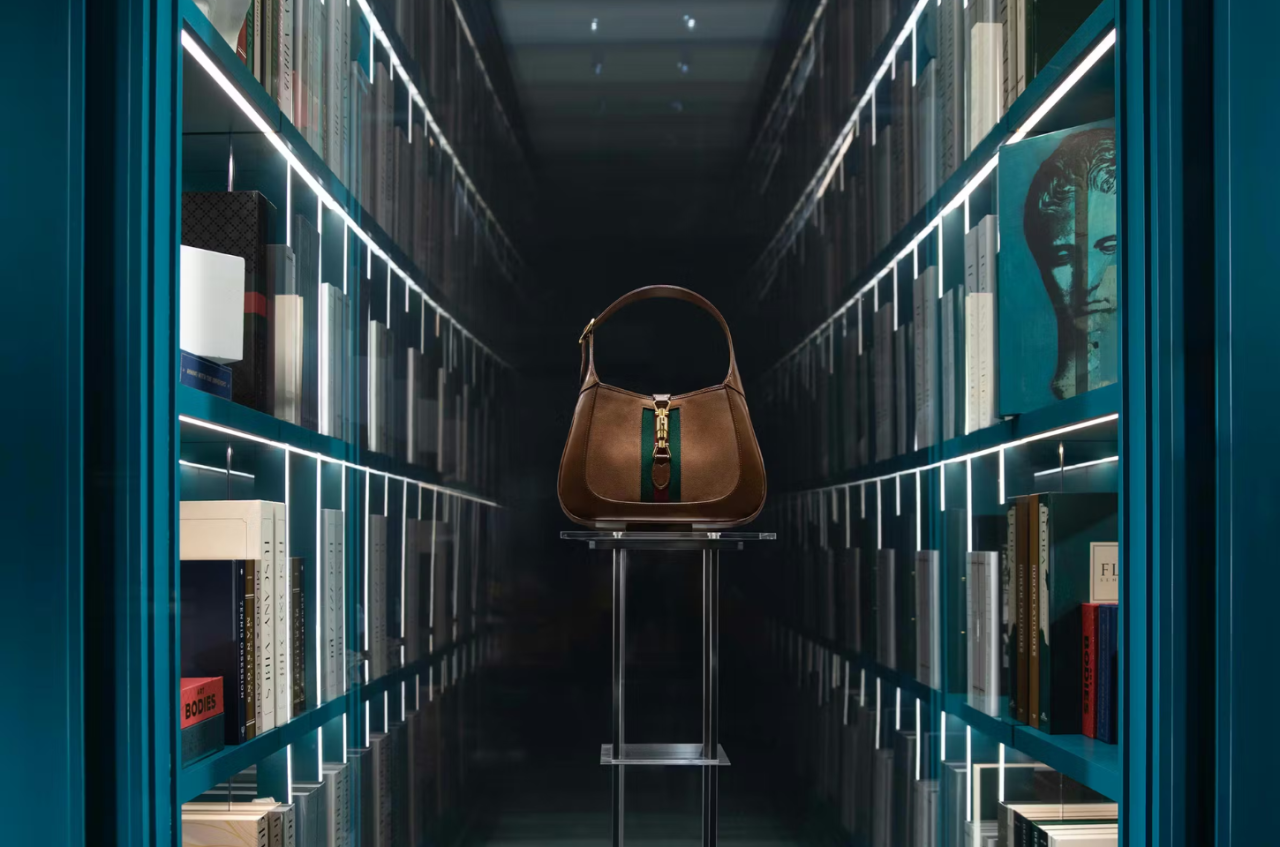
Gucci seems to have grasped this when it introduced Endless Narratives, the global window concept developed with the artist Luca Pignatelli: mirrored libraries, books, artifacts and products coexisting in what Wallpaper* described as an “installation-like” logic.
What makes it interesting is where it acts: before entry. It slows visual scanning, increases curiosity, and prepares the visitor for a more intentional experience. A form of pre-time—an intervention on the attentional threshold that precedes the retail space and reshapes its perception.
A superficial experience generates less desirability, less memory, less attachment to the brand. And in a market where differentiation often plays out in the nuances of experience, neglecting perceived time is a silent strategic error: it won’t show in daily sales data, but it will surface in the long-term quality of the relationship.
Designing time: operational insights
The good news is that working on time perception does not require major renovations or disproportionate investments. It requires a different design awareness—one that can be activated immediately. What follows is not a manual, but a map of concrete levers, already in play within the most advanced brands and within our own design toolkit.
• Visual rhythm.
The brain needs space to construct meaning. Fewer products per linear meter, greater distance between displays, moments of visual pause within the layout: minimal interventions with a deep cognitive impact. When everything is dense, the eye slides. When there is space, it settles.
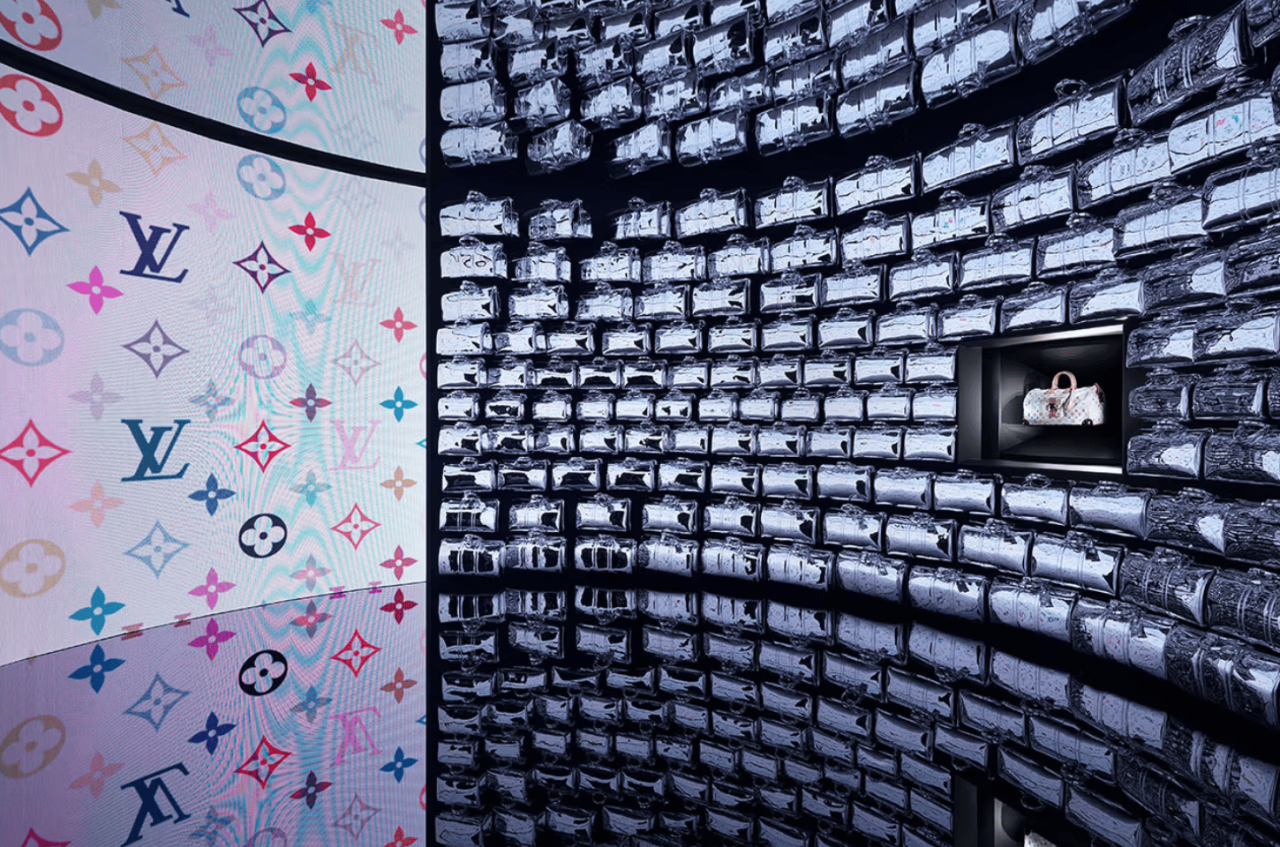
Louis Vuitton The Place Bangkok, designed by OMA / Shohei Shigematsu, is perhaps the most radical application of this principle in contemporary luxury retail.
The immersive exhibition Visionary Journeys spatializes the brand’s history and savoir-faire across a sequence of thematic rooms, with visits bookable as one would for a museum. Alongside it: store, restaurant, café. The format shifts the mental mode from quick shopping to intentional visit. Time expands because the experience is structured into rooms and chapters—exactly like an exhibition path.
• Micro-rituals.
A guided presentation, a codified gesture—the opening of the box, the narration of the material, a carefully shaped closing—slows perception without slowing operations. This is Daniel Kahneman’s Peak-End Rule in action: what is curated at the end is what stays in memory.
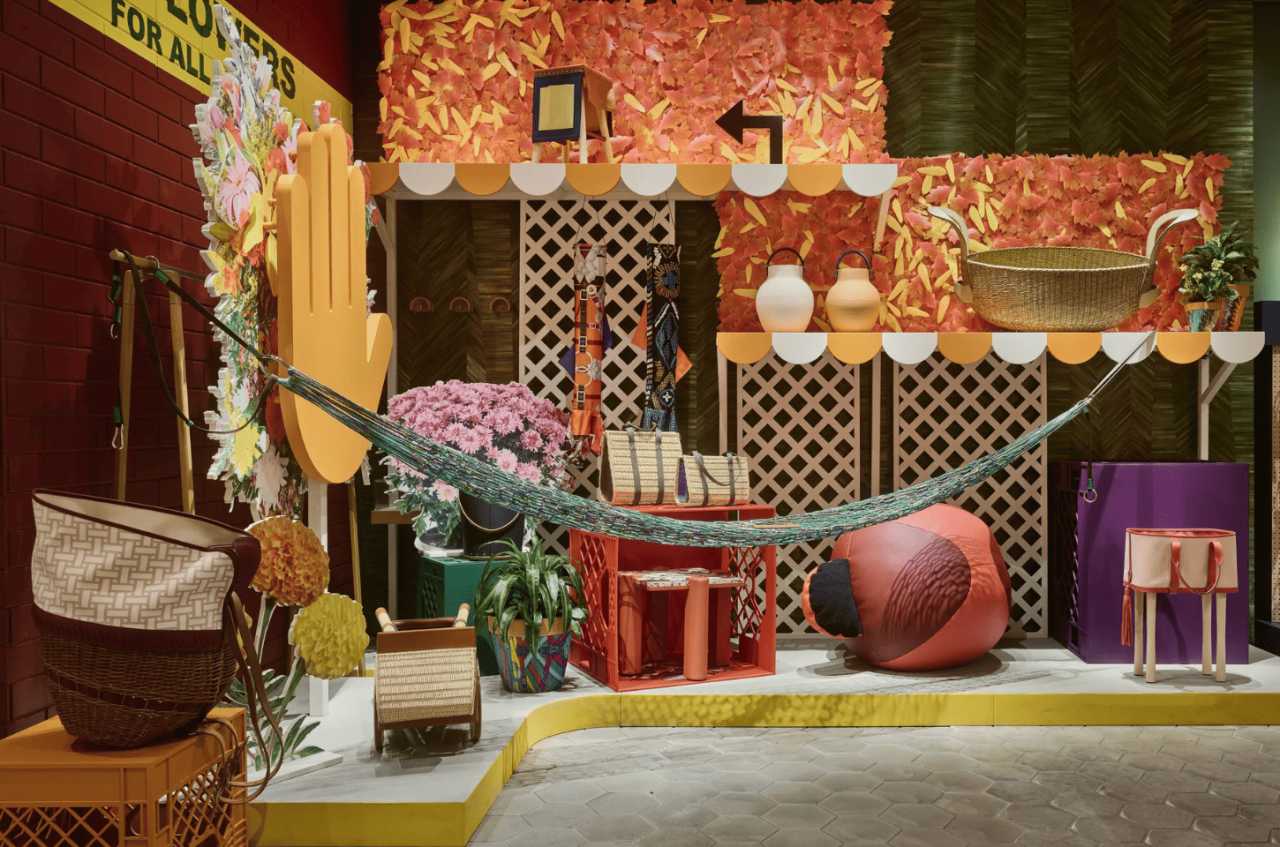
When Hermès brings Petit H into its flagships—such as on Madison Avenue in New York, with a site-specific installation by Lucia Hierro, featuring floors echoing Central Park and neon signs evoking disappearing local stores—it is doing exactly this: inserting moments of surprise and artisanal storytelling into the flow of the visit. Emotional peaks the client does not ask for, but will remember.
• Micro-waits.
Waiting is not lost time. It is qualified time—if designed. A comfortable seating area, a tea, a beautiful object to observe while waiting. The idea of the guest, rather than the customer—central to leDehors’ design philosophy—starts here: restoring dignity to every minute spent in the space, including those we usually consider “empty.”
It is the same principle behind the design of hands-on workshops, immersive experiences, and slow gestures that leDehors integrates into retail environments: not fast experiences to consume, but experiences to move through.
• Sound.
The classic study by Ronald Milliman (1982), published in the Journal of Marketing, showed that consumers spend up to 38% more time in-store when exposed to slow music rather than fast. More recent research confirms that soft, coherent soundscapes increase dwell time, while fast-paced music accelerates time perception. In luxury, acceleration is almost always a mistake.
• Sequence.
Not everything at once. A three-act journey—welcome, discovery, closing—allows the brain to encode the experience as denser compared to one where everything happens simultaneously. Sequence is the grammar of perceived time. Without it, even an hour dissolves into something that leaves no trace.
This is precisely the challenge leDehors has been working on for years in the design of in-store experiences: expanding perception without slowing performance.
It is not about adding time. It is about giving it form—building sequences, rituals, pauses, densities—so that every minute spent in the space leaves a trace in memory.
_____________________________________
>>> Want to receive our insights by email?
<link=https://mailchi.mp/f5885095b5d5/signup-ledehors>Subscribe to the leDehors NEWSLETTER

Temporary Retail as a Power Move
“Nothing is created, nothing is destroyed, everything is transformed.”
Does it ring a bell? It’... altro
Ricordi Minority Report, il film di Steven Spielberg tratto da un racconto di Philip Dick? Un poliziesco di fantascien... altro
Negli anni ’20 ci siamo abituati ad adattarci. Il 2024 è l’anno in cui riprendere in mano la situaz... altro
What’s really changing — insights from Fuorisalone 2026
Every year, we go to Fuorisalone with one question: what is changing in the way people assign value to things? This ye... altro
By visiting the site you implicitly accept the use of cookies to improve navigation and show content in line with your preferences. View the privacy and cookie policy




 https://ledehors.com/news/97-time_is_the_ultimate_luxury